Arts for All Announces its 2026-2027 Fellows
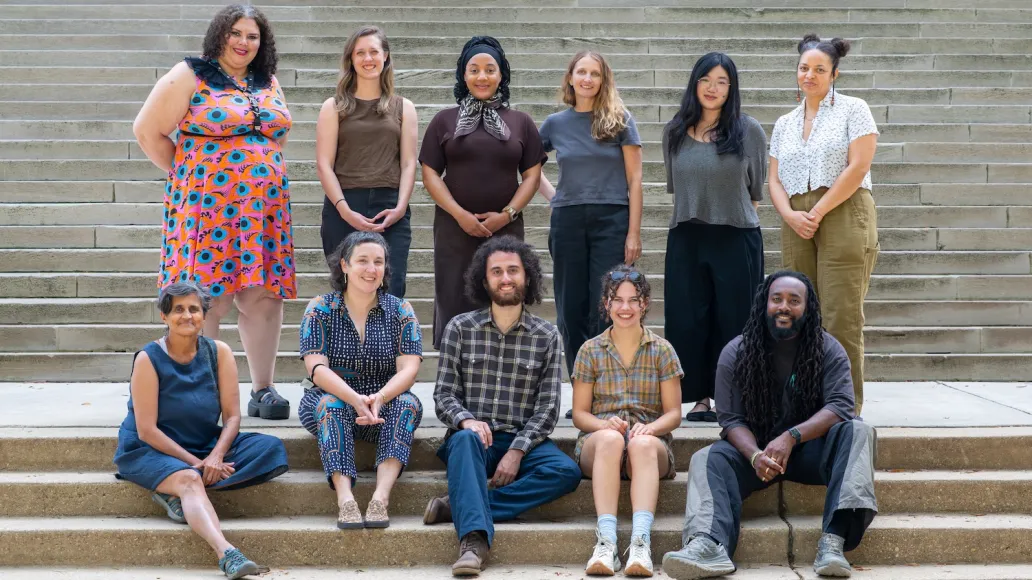
Arts for All is thrilled to announce the 2026-27 Arts for All Fellows. Funded by the Sara Chase Carlson Arts for All Awards, these recipients represent a broad range of disciplines including math education, botanical art, climate justice, music composition, sociology, theater and more. Each of these unique researchers works to build cross-disciplinary connections and contributes to our arts-informed university.
Our newest fellows join a community of thoughtful and innovative researchers and receive funding support for their arts-based research projects. As ambassadors for Arts for All, each fellows will lead publicly-engaged research across campus and within the surrounding community to spark dialogue, understanding, problem-solving and action. Over the course of the next year, we look forward to supporting their valuable activities and highlighting their groundbreaking research.
Congratulations to the newest Arts for All Faculty and Graduate Student Fellows!
2026-27 Faculty Fellows
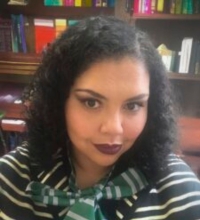
Sydney Lewis, senior lecturer in the Harriet Tubman Department of Women, Gender, and Sexuality Studies
Lewis will explore how Black women, femmes and gender-nonconforming performers in Baltimore and Washington, D.C., shaped underground performance cultures in the late 19th and early 20th centuries through the dance production, “Femmes Noires and the Pansy Craze,” debuting in February 2027. Her research centers the arts as a critical tool for documenting, interpreting and sharing knowledge and histories, treating aesthetics and performance as both archive and method. By moving archival materials from page to stage, this project illustrates how performance-based scholarship can connect faculty research, student learning and community engagement while bringing overlooked histories into public view.
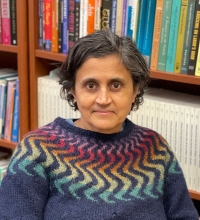
Sangeetha Madhavan, professor of African American and Africana studies, professor of sociology
Madhavan will use arts-based methodologies to translate her sociological research findings about family systems, parenting, household dynamics and child well-being in Nairobi, Kenya. Drawing on the expertise of local community organizations and artists in Kenya to conceptualize these complex interactions through artistic mediums, the research will be interpreted to be more accessible to the communities at the center of her research. Through this interdisciplinary approach to sociological research, Madhavan hopes to empower those communities, inviting them to be active participants in the research process itself.
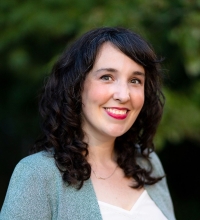
Caitlin Marshall, assistant professor of theatre scholarship and performance studies
Marshall plans to further develop “The Saturday Nighters,” an original two-act musical that tells the forgotten history of the S Street Salon, a weekly gathering of Black artists, playwrights, musicians, poets and activists in early 20th century Washington, D.C. In collaboration with partners at Howard University, Marshall will host an artist residency and public workshops of the musical featuring UMD and Howard students. By positioning arts practice as research, this work makes history accessible and tangible to the public at large.

Jayson Porter, assistant professor of history, director of the CEDAR Gallery
Porter aims to address climate anxiety in student populations through a multi-modal approach centered in the arts. He will bridge environmental justice and the arts through expanding programming at the CEDAR Gallery, creating a climate anxiety toolkit and working with sustainability-focused groups on and off-campus. This work will bolster the university’s support of student wellness and highlight UMD as a model campus for sustainability and environmental justice research.
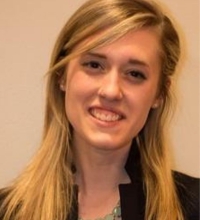
Jeannette Schollaert, outreach and engagement librarian in Special Collections at the University of Maryland Libraries
Schollaert’s fellowship will explore the botanical book arts. She will develop a creative accompaniment to her own research and establish new papermaking capabilities for the Hornbake Library Letterpress Studio (HLLS). Her research explores how herbal abortion knowledge circulates in American fiction from the 19th century to the present. Drawing on the plants referenced in her research, she will work towards creating an in-house artist’s book. Through this process, she will equip the HLLS with new tools, resources, and skills to host public workshops exploring plant papermaking and natural dyes and inks, expanding the studio’s long-term offerings to the campus community.
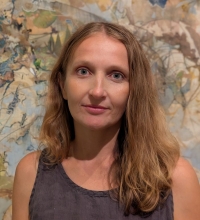
Jowita Wyszomirska, senior lecturer in art
Wyszomirska will develop “Shared Understory,” a large-scale installation exploring the botanical life within the city of Baltimore and surrounding regions where urban and forest environments meet. In collaboration with the College of Agriculture and Natural Resources, she will interpret scientific findings using eco-printing and plant-based dyes for the installation. By translating ecological data into large-scale paintings and immersive installations, the project sparks dialogue between art and science, furthers environmental literacy and encourages discussions about climate resilience and the role of local flora.
2026-27 Graduate Student Fellows
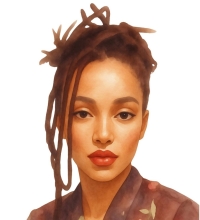
mei bowyer, Ph.D. candidate in urban education
bowyer will develop an immersive digital environment that explores what becomes possible when learning is emplaced rather than contained. Through digital placemaking, storytelling and interactive elements, the project invites artists, creatives and educators to co-create digital homeplaces that draw on Black feminist imaginaries as generative sites of being, feeling and knowing. By expanding learning through collaborative homeplacing, the research examines emplaced learning as a radical, shared practice of worldbuilding, reimagining the environments we inhabit as sites of collective care, belonging and mutual knowledge production.
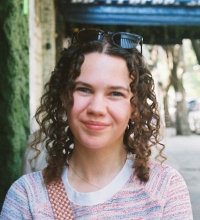
Savannah Holt, Ph.D. student in communication
Holt will examine how the arts can be used as a communication tool to impact reactions and responses to climate change in student populations. Through a series of mixed-methods studies using interviews and survey data, this research will explore how different mediums of art can impact undergraduates’ anxieties around climate change and their motivations to engage in pro-environmental behaviors. By exploring how to enact sustainable changes without increasing climate-related trauma, Holt will use the arts as a visual communication tool that fosters connection, reduces stress and empowers students to take sustainable action.
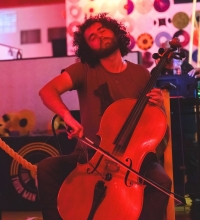
John Pablo Rojas, master’s student in music
Rojas plans to produce original compositions that translate sociopolitical issues and invite audiences to reflect on their own relationships to those issues. Through a series of collaborative lectures and recitals, he will reach beyond a classical music curriculum, offering listeners a chance to develop their own sense of meaningful contemporary art making. This work will provide listeners and collaborators with the tools to incorporate elements of activism into their artistic practice.
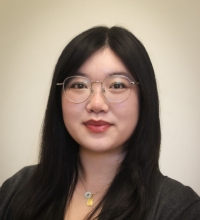
Anne Rong, master’s student in English language and literature
Rong will develop “Folding Identity: AAPI Zines in Conversation and Making,” a speaker and workshop series in which AAPI zinesters from across the DMV are invited to join the UMD community in collaborating and exploring the full range of a zine’s possibilities. This work aims to bridge practice and scholarship, positioning the arts as a method of inquiry and community-building while also placing UMD within the longer history of Asian American self-publication that extends from the 1960s to the present.
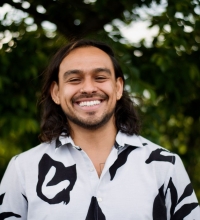
Luis Alejandro Royo Romero, Ph.D. candidate in math education
Royo Romero will use this fellowship to further develop MARTEH—a bilingual blend of Math + Arte. This new framework treats mathematics not as a cold set of rules but as a living, sensory and cultural practice. This project brings together artists as co-creators to move math off the chalkboard and into the body, supplementing alphanumeric formulas with visual art and physical movement that serve as mathematical proofs. Ultimately, this work will prepare the next generation of educators to see math as a diverse, experience-driven language and to recognize and celebrate the unique mathematical brilliance of all their future students.
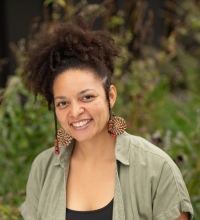
Jessica Valoris, master’s student in studio art
Valoris’ research and creative practice engages fugitivity as a method of placemaking, kin-making and knowledge-making. Drawing on Black fugitive legacies, she will explore how practices of care, ritual, remembrance and land stewardship can respond to conditions of polycrisis, ecological collapse and the carceral afterlives of slavery. Through a series of performance provocations on campus, visual art, installation and collaborative practice, she will engage artmaking as a site of care, memorykeeping, disruption and liberatory imagining.